


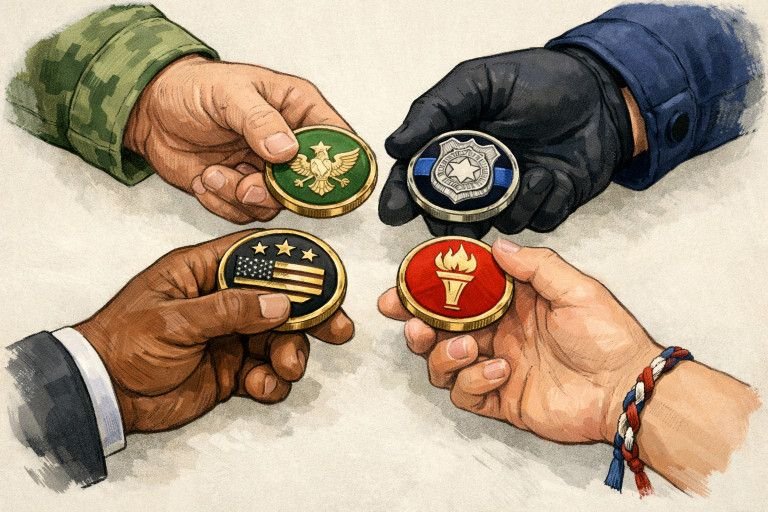
Challenge coins have become cherished symbols of belonging, honor, and achievement across a variety of communities, most notably in the military. These small medallions, each designed with unique insignias, have traditions and stories that stretch back decades. Today, a challenge coin maker can help organizations create coins that encapsulate their identity and achievements, making these tokens accessible to more people than ever before.
The allure of challenge coins lies not just in their beauty or craftsmanship, but in the camaraderie they represent. From military units to police squads, corporate teams, and community groups, each coin tells a story and carries meaning for those who hold it. As these coins have gained popularity outside of their military origins, the rituals and symbolism associated with them have also evolved.
Understanding the historical roots and enduring significance of challenge coins provides a glimpse into how symbols foster loyalty and shared pride. For military personnel, carrying a unit’s coin can be a badge of honor, signifying service, bravery, or participation in a significant event. Their journey through history is filled with legend, tradition, and evolving meaning for successive generations.
The custom of carrying and exchanging these coins extends to organizations and collectors worldwide. For more details on the broader history and culture around tokens of recognition and belonging, see this Wikipedia article.
The precise origins of challenge coins remain a topic of debate. One widely accepted legend traces the tradition to World War I, when a wealthy lieutenant ordered bronze medallions as personal mementos for his squadron. According to the tale, a downed pilot who carried his coin was able to prove his identity and escape execution after being captured behind enemy lines. This story, though compelling, is just one of several.
Some credit the rise of challenge coins to the Vietnam War era, where medallions, poker chips, or specially marked coins were used by military personnel to verify unit membership and foster morale. While no single origin story dominates, all are united by the idea that these small tokens serve as powerful reminders of unity, shared hardship, and loyalty among peers. Detailed stories about the roots and traditions of challenge coins can be found on the Wikipedia page.
Symbolism and Design
Every aspect of a challenge coin’s design is purposeful, contributing to its unique story. On military coins, unit insignias, mottos, and dates often commemorate the formation of a group or the completion of a mission. Colors are used intentionally; for example, red may represent courage, while blue symbolizes loyalty. In many cases, intricate details or hidden symbols are included on the coins, known only to members of the issuing organization, adding a private dimension to the coin’s significance.
Some coins are designed to recognize specific achievements, such as exceptional service, successful deployments, or acts of heroism. Others aim to build esprit de corps among members, reinforcing a shared identity. Whether used by police departments, fire brigades, or corporate teams, the symbolism of each design element helps coins become much more than simple souvenirs.
Modern Uses and Collectibility
Today, challenge coins extend well beyond their military origins. Law enforcement agencies often distribute coins to commemorate milestones or build morale. Corporations, sports teams, and social clubs have adopted custom coins as tools for recognition and celebration. This widening appeal has helped fuel a growing collector’s market, with some enthusiasts seeking out rare and historical coins linked to notable events or figures.
The collectibility of challenge coins is boosted not only by their designs but also by the stories and traditions attached to them. Limited edition runs, collaborations with well-known artists, and coins crafted for special events all contribute to their desirability. In some cases, the coins become highly sought-after pieces, featured in private collections and public exhibits alike.
The Challenge Tradition
The coin challenge is a tradition that adds another layer of fun and ritual to the act of possessing a coin. When someone announces a “coin check” in a group setting, everyone present must immediately display their challenge coin. Failing to produce one often leads to playful forfeits, such as buying a round of drinks. The challenge ritual serves both as an icebreaker and as a continual reminder to keep your coin on hand at all times.
This tradition not only reinforces camaraderie but also ensures that coins are always respected and present in settings where shared identity matters. It’s an entertaining way to celebrate membership and strengthens the bonds between coin holders regardless of their background.
Designing Your Own Challenge Coin
Crafting a custom challenge coin allows any organization to share its mission, values, and achievements in a single piece of meaningful art. The design process begins by defining the coin’s purpose: recognition, membership, or a special event. After establishing the goal, key design elements such as insignias, mottos, and color schemes are selected to reflect the group’s ethos.
Quality is essential for longevity; choosing durable materials and skilled craftsmanship will help ensure the coin is a lasting keepsake. Collaborating with experienced designers or companies with a history of producing memorable coins ensures the final product will be appreciated for years to come and truly represent the spirit of the group or achievement it celebrates.
Conclusion
Challenge coins have transcended their origins as simple tokens, evolving into powerful emblems of unity, achievement, and shared history. Whether exchanged between veterans, presented to employees, or collected as meaningful artifacts, these medallions bind people together across generations and organizations. For anyone interested in the rituals and meaning behind these coins, their enduring legacy offers insights into how simple objects can carry so much pride and loyalty.