



Why Does My Midea AC Keep Turning Off? 7 Causes and DIY Fixes
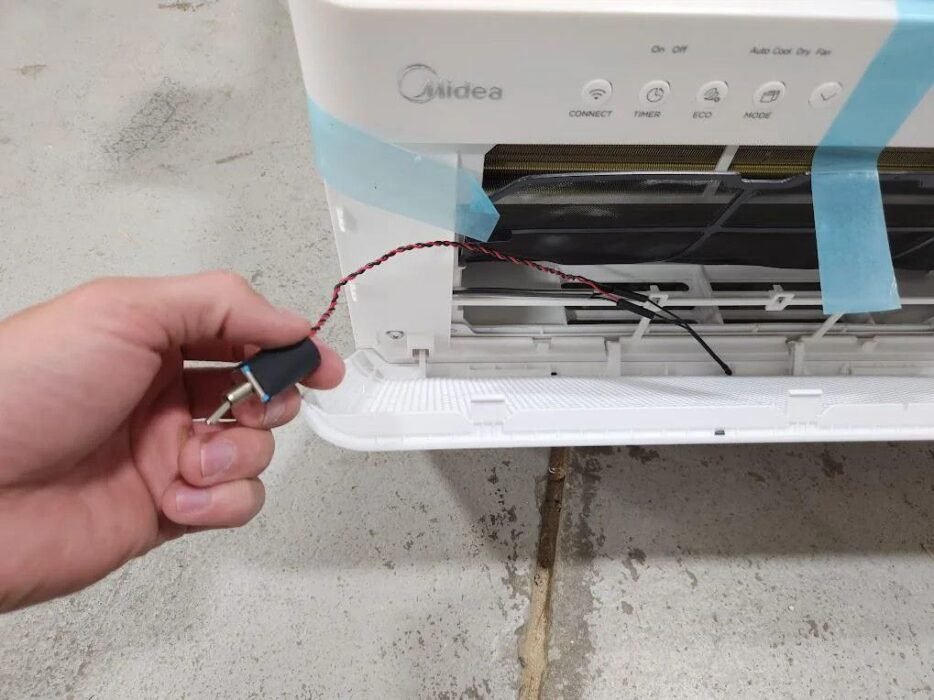
A Midea air conditioner that shuts off by itself is responding to a protective sensor — a temperature sensor, a pressure switch, a float switch, or a timer — that has detected a condition capable of damaging the compressor, the fan motor, or the control board. The shutdown is not a random failure. It is a deliberate power cut triggered by one of these safety devices. The shutdown pattern — when it happens, whether it restarts on its own, what the display shows — identifies which sensor triggered it.
Midea is the world’s largest manufacturer of air conditioners by volume, producing units under its own brand and as an OEM for other brands. Midea’s inverter-driven compressor technology includes several energy-saving modes — ECO, Sleep, and Follow Me — that can be mistaken for a malfunction when the compressor ramps down or cycles in a way that the homeowner does not expect. Before calling a technician, verify the mode settings on the remote and clean the air filter. Those two zero-cost checks solve roughly half of Midea shutdown problems.
1. Dirty Air Filter: The Most Common Cause
A clogged air filter restricts airflow across the evaporator coil. The coil temperature drops below freezing, ice forms on the fins, and the unit’s freeze protection thermistor cuts compressor power. This is the single most common reason any Midea AC — window, portable, mini-split, or central — shuts off unexpectedly.
On a Midea window or portable unit, the filter slides out from the front panel or the side. Rinse it under warm water and let it dry completely. On a Midea mini-split, lift the front panel and pull the filter tabs. Clean filters every 2 to 4 weeks during cooling season. If the evaporator coil behind the filter is covered in frost or ice, the coil is frozen. Turn the unit off, switch to FAN ONLY mode, and let it thaw for 1 to 4 hours before restarting.
2. Timer, Sleep Mode, and ECO Mode Settings
Midea remotes have a TIMER button that sets the unit to shut off after a specified number of hours. If the timer was set accidentally — or set by a previous user and never cleared — the unit will turn off on schedule and appear to be malfunctioning. Check the remote display for a clock icon or the word TIMER. Press the TIMER button until the icon disappears.
Midea’s Sleep mode gradually raises the set temperature by 1°C to 2°C (about 2°F to 4°F) over the first few hours of operation. A unit set to 22°C at bedtime may be maintaining 26°C by morning. The unit did not turn off — it followed a programmed temperature curve. Midea’s ECO mode reduces compressor speed to save energy once the room approaches the set temperature. The reduced airflow and less aggressive cooling can be mistaken for the unit winding down or turning off. Check the remote display for moon (Sleep) or leaf (ECO) icons. Disable these modes if you prefer constant cooling.
Midea remote reset: Remove the batteries from the remote. Press and hold the ON/OFF button for 5 seconds with the batteries removed. Reinsert fresh batteries. This clears any corrupted settings in the remote’s memory. Point the remote at the indoor unit and press ON/OFF. If the shutdown problem disappears, the remote was sending incorrect signals.
3. Frozen Evaporator Coil
A frozen coil triggers a protective compressor shutdown. Open the front panel and look at the metal fins behind the filter. Frost or ice confirms a frozen coil. The freeze is caused by inadequate airflow (dirty filter, blocked return, failing fan motor) or low refrigerant.
Turn the unit off. Run the fan only on high speed for 1 to 4 hours to thaw. Place towels under the indoor unit — melting ice produces more water than the drain pan is designed to handle. Do not chip at the ice. After thawing, clean the filter and restart. If the coil freezes again within days, the refrigerant charge is low and the system has a leak — call an EPA-certified technician ($500 to $1,500).
4. Condensate Drain Clog and Float Switch
Midea mini-splits and portable units use a float switch in the condensate drain pan that cuts power when the water level rises. A clogged drain line causes the pan to fill, the switch trips, and the unit shuts off. After 30 to 60 minutes, enough water seeps past the partial clog for the switch to reset, and the unit restarts — then the cycle repeats.
Clear the drain line with a wet-dry vacuum from the outside end of the pipe. Pour a cup of warm water with a few drops of bleach into the drain pan. On a Midea portable AC, the internal tank may be full. Locate the drain plug on the back or bottom of the unit, remove it, and drain the tank completely.
5. Overheating Compressor
A Midea split system with the outdoor unit shutting down while the indoor unit continues to run has an overheating compressor. Clean the condenser coil — turn off power, remove the outer cover, and spray the coil from the inside outward with a garden hose. Straighten bent fins with a fin comb. Clear all vegetation within 2 feet of the unit. A dirty condenser coil reduces heat rejection and forces the compressor to run hotter until its thermal overload trips.
If the outdoor fan is not spinning when the compressor tries to run, the fan capacitor or fan motor has failed. A humming outdoor unit with a stationary fan is a failed capacitor — a $150 to $300 repair. Do not run the AC with a non-spinning condenser fan. The compressor will overheat within minutes.
6. Low Refrigerant or Refrigerant Leak
A Midea AC that runs for 30 to 90 seconds, shuts off, and restarts repeatedly is experiencing low-pressure cutoff. The system’s low-pressure sensor detects inadequate refrigerant returning to the compressor, and the control board cuts power to protect the compressor from running without proper cooling. Other signs: weak cooling, ice on the suction line at the outdoor unit, a hissing sound, and oily residue at the refrigerant line connections.
Air conditioners are sealed systems. Refrigerant does not get used up. A low charge means a leak. An EPA-certified technician must find the leak, repair it, evacuate the system, and recharge. Leak repair and recharge costs $500 to $1,500. For Midea window and portable units, the repair cost often exceeds the cost of a replacement unit.
7. Electrical Issues and Midea Error Codes
A Midea AC that trips its circuit breaker or shuts down due to a power interruption has an electrical problem. Window and portable units sharing a circuit with other appliances can overload the breaker when the compressor starts. Plug the unit into a dedicated outlet. Never use an extension cord — the added resistance causes voltage drop, which causes the compressor to draw more current, overheat, and cycle on its thermal overload.
Midea units display error codes that identify the specific fault. E0 or E1: indoor room temperature sensor failure. E2: evaporator coil sensor failure. E4: compressor overload. F0 or P0: refrigerant leak or low-pressure fault. P4: inverter compressor drive error. Write down the code, unplug the unit or turn off the breaker for 5 minutes to reset the control board, and restore power. If the code reappears, the fault is persistent and requires a technician.
FAQ: Common Questions About Midea AC Shutdowns
Why does my Midea AC turn on and off every few minutes?
Short cycling — the compressor runs for 1 to 5 minutes, stops, and restarts — is caused by an oversized unit, a thermostat sensor too close to the cold air outlet, or a failing capacitor. An oversized unit cools the room so fast the thermostat satisfies before the compressor runs a full cycle. The DOE recommends 20 BTU per square foot. A failing capacitor produces a distinctive pattern: the compressor tries to start, buzzes, and shuts off on thermal overload, then tries again.
My brand-new Midea AC keeps turning off. Is it defective?
Not necessarily. Check the timer setting, the Sleep mode, and the ECO mode on the remote — these are the most common causes of unexpected shutdowns on new Midea units. If the modes are correct, verify the unit is on a dedicated circuit and not sharing power with other appliances. If the unit still shuts off, the installation may have a wiring error, a kinked refrigerant line, or a manufacturing defect — contact Midea warranty support. Midea provides a 1- to 2-year parts and labor warranty on most residential units.
Check the Filter, Check the Remote, Then Call If It Persists
A Midea AC that keeps turning off is being protected by a sensor. Clean the filter. Verify the timer, Sleep, and ECO modes are off. Thaw a frozen coil. Clear a clogged drain. Clean the outdoor condenser coil. Those six zero-cost checks solve the majority of Midea shutdown problems.
If the unit is still shutting off — especially if it runs for less than a minute and stops, or if an error code appears on the display — the problem is the refrigerant charge, the compressor, or the control electronics. Note the error code, reset the unit once, and if the shutdown recurs, call a technician. The error code tells the technician exactly which sensor triggered the shutdown, cutting diagnostic time significantly.