



Your Customers Are Asking AI Instead of Googling. Here’s Why You’re Probably Invisible to It.
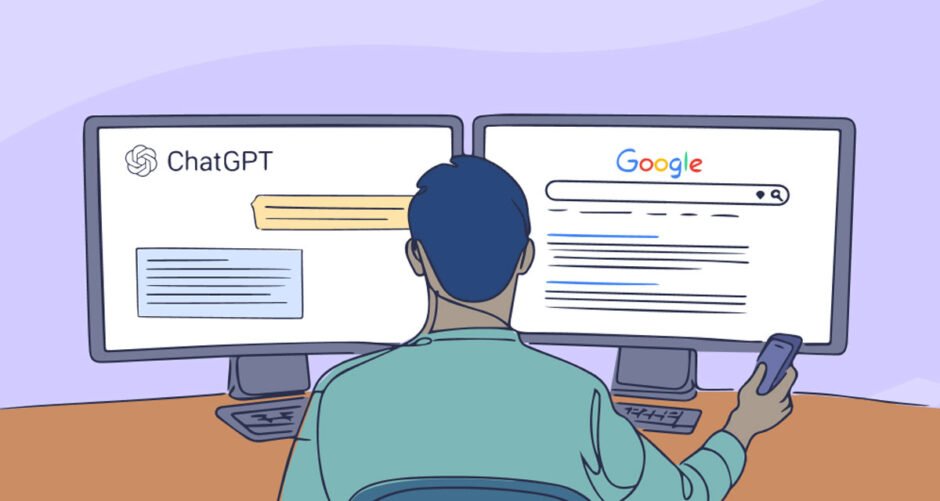
Something shifted quietly over the last couple of years, and a lot of business owners missed it. Their customers didn’t stop searching. They just stopped going to Google first.
Ask anyone under 35 how they found their last restaurant recommendation, their accountant, or the software they trialed last month. A growing number of them will tell you they asked ChatGPT, Perplexity, or the AI Overview that now sits at the top of Google before the actual results even begin.
The behavior looks small in isolation. Across thousands of customers, it represents a fundamental change in how people discover businesses.
The uncomfortable part? Most small businesses have no idea whether they show up in those AI-generated answers. And the ones that don’t invest any thought into it almost certainly don’t.
Why AI Answers Work Differently Than Search Rankings
Traditional SEO operates on a fairly understandable logic. You optimize a page, earn some links, and climb a list of results. A person sees your link and decides whether to click. The whole system is transparent in a way that lets you measure progress and iterate.
AI assistants don’t work that way.
When someone asks ChatGPT, “What’s a good email marketing tool for a bakery?” or “Who does custom metalwork in Nashville?” the model doesn’t produce a ranked list of blue links. It synthesizes an answer from whatever it has absorbed during training and, in some cases, from live web retrieval.
The user often gets one or two names. Sometimes just one.
And the reasoning behind that choice is opaque.
That’s what makes this genuinely harder. You can’t just check a rank tracker and see where you stand. The question of whether an AI mentions your business depends on a tangle of factors:
- How thoroughly you’re documented across the web
- What gets said about you on third-party sites
- How clearly your content explains what you actually do and who you serve
- Whether authoritative sources have treated you as worth referencing
A business with a thin web presence, inconsistent information across directories, and a website full of vague marketing language is essentially invisible to these systems.
The model has almost nothing useful to absorb about them.
What Actually Helps You Show Up
The businesses that tend to appear in AI-generated answers share a few common traits, and none of them are magic.
1. Strong Presence Beyond Your Own Website
First, they’re well-documented outside their own website.
This includes:
- Google reviews
- Yelp listings
- Industry directories
- Mentions in local press
- Quotes in trade publications
- Forum discussions where customers recommend them by name
AI models learn from the broader web, not just your homepage.
If your business only exists in meaningful detail on your own domain, that’s a problem.
2. Specific, Useful Content
Second, their content is specific and genuinely useful.
A bakery’s website that explains its process, specialties, and neighborhood in real detail gives an AI model something concrete to work with.
A website that says:
“We bake artisan goods with passion and care.”
gives it almost nothing.
Clarity about what you do, who you serve, and where you operate matters more now than it ever did.
3. Consistent Business Information
Third, they keep their foundational information consistent.
Your:
- Business name
- Address
- Phone number
- Services
- Social profiles
should match across every directory and platform.
This sounds boring because it is.
It’s also the kind of signal that builds credibility with both AI systems and the people who train and evaluate them.
The Rise of Generative Engine Optimization
For businesses that want to approach this more strategically, the practice is starting to be called generative engine optimization (GEO).
GEO focuses on how large language models and AI-powered search tools:
- Interpret a business
- Evaluate trustworthiness
- Decide what information to surface
- Determine which businesses deserve citations or recommendations
It’s a different frame from traditional SEO, although the two overlap significantly.
The Honest Timeline
None of this produces results overnight.
AI models update on their own schedules, and some of the changes you make won’t be reflected in answers for months.
That’s genuinely frustrating if you’re used to the relatively faster feedback loops of paid search or social media marketing.
The argument for starting now is simple:
The businesses building this kind of presence today will be the ones with established credibility when AI-driven discovery becomes even more dominant.
Waiting until it feels urgent means starting from zero at the exact moment your competitors already have a head start.
Final Thoughts
You don’t need to overhaul everything at once.
Start by auditing what someone asking an AI about your category would actually find about you.
Then make it:
- Better
- More specific
- More trustworthy
- More visible
That’s where this starts.
As AI becomes an increasingly important gateway between customers and businesses, being discoverable is no longer just about ranking on Google. It’s about making sure AI systems understand who you are, what you offer, and why you’re worth recommending.