



How Much Does a Flat Roof Replacement Cost? Full Price Breakdown by Material (2026)
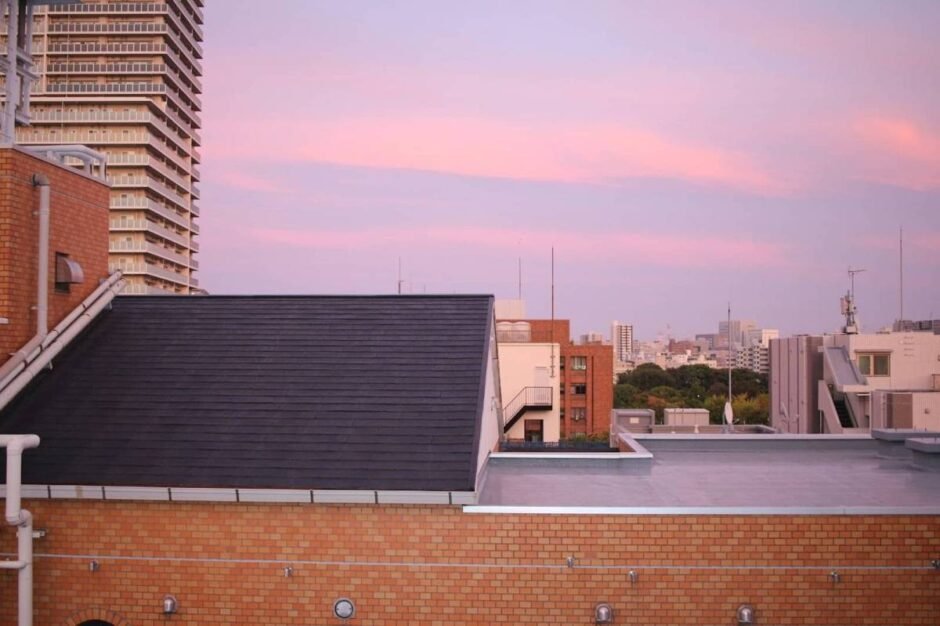
A flat roof replacement costs $5,000 to $15,000 for a typical 1,500-square-foot residential roof in 2026, or $4 to $10 per square foot installed. The price depends almost entirely on the roofing membrane material, which accounts for roughly 40% of the total cost. Labor accounts for another 40%, and the remaining 20% covers tear-off of the old roof, disposal fees, insulation replacement, and any decking repairs discovered after the old roof comes off.
Flat roofs cost more per square foot than sloped shingle roofs because the materials are more expensive and the labor is more specialized. An asphalt shingle roof costs $4 to $7 per square foot installed. An EPDM rubber flat roof costs $5 to $8 per square foot. A PVC membrane costs $8 to $12. The gap widens at the premium end: a TPO membrane costs roughly the same as a standing seam metal roof on a per-square-foot basis.
Flat Roof Replacement Cost by Membrane Material
The membrane is the waterproof layer that covers the entire roof surface. Every flat roof has one, and the choice of membrane determines the installed cost, the lifespan, and the maintenance requirements for the next 15 to 30 years.
| Membrane Type | Cost per sq ft (Installed) | Total for 1,500 sq ft | Typical Lifespan | Best For |
| EPDM (Rubber) | $5.00-$8.00 | $7,500-$12,000 | 20-25 years | Residential, budget, DIY-friendly |
| TPO (Thermoplastic) | $6.50-$10.00 | $9,750-$15,000 | 20-30 years | Residential/commercial, energy-efficient |
| PVC (Vinyl) | $8.00-$12.00 | $12,000-$18,000 | 25-30 years | Restaurant/grease exhaust, chemical resistance |
| Modified Bitumen (Mod Bit) | $5.50-$9.00 | $8,250-$13,500 | 15-20 years | Residential, low-traffic, multi-layer |
| Built-Up Roof (BUR, Tar & Gravel) | $6.00-$10.00 | $9,000-$15,000 | 15-25 years | Commercial, heavy traffic, old buildings |
| Spray Polyurethane Foam (SPF) | $6.00-$10.00 | $9,000-$15,000 | 15-25 years (with recoating) | Complex roof shapes, seamless insulation |
EPDM — ethylene propylene diene monomer, a synthetic rubber — is the most common flat roof membrane on residential homes in North America. It comes in large rolls (typically 10 to 50 feet wide), which means a small residential roof can be covered with a single sheet and no field seams. The seams are the failure point on every flat roof membrane, so a roof with fewer seams lasts longer. A standard 20-by-30-foot garage roof built with one sheet of EPDM will outlast a 40-by-80-foot commercial roof with 15 field-welded seams, even though the material is identical.
TPO and PVC are thermoplastic membranes — they are heat-welded at the seams rather than glued with adhesive. A properly welded TPO seam is stronger than the membrane itself. The material tears before the seam separates. This is the primary advantage of TPO and PVC over EPDM, whose seams rely on adhesive tape or liquid bonding adhesive that degrades over 15 to 20 years. The heat-welded seam on a TPO roof will outlast the EPDM tape seam by roughly 10 years.
Tear-Off vs. Overlay: One Decision That Changes the Price by 30%
Every flat roof replacement involves a decision: tear off the existing roof down to the deck, or install the new membrane over the old one. The choice affects the cost by 25% to 35% and the lifespan of the new roof by a similar margin.
| Approach | Cost Impact | Lifespan Impact | When to Use |
| Full Tear-Off | +$2.00-$4.00 per sq ft | Full lifespan of new membrane | Existing roof has leaks, wet insulation, or more than one layer |
| Overlay (Recover) | Baseline cost | 10-20% shorter than full tear-off | Single existing layer, dry deck, good condition |
A tear-off adds $2 to $4 per square foot to the job — roughly $3,000 to $6,000 on a 1,500-square-foot roof — because the crew spends a full day cutting the old membrane into strips, prying it off the deck, and hauling it to a dumpster. The benefit is that the contractor can inspect the decking and replace any rotted plywood or OSB before the new membrane goes down. An overlay skips that inspection. Wet insulation or rotted decking hidden under the old membrane will continue to deteriorate, and the new membrane will fail prematurely because its substrate is uneven and waterlogged.
Building codes in most jurisdictions limit flat roofs to two layers. If your roof already has two layers, a full tear-off is mandatory — overlay is not an option.
What Else Goes Into a Flat Roof Replacement Cost
The membrane is the headline item, but a flat roof is a system, not a sheet of rubber. The components below and around the membrane add significantly to the total.
- Tapered insulation. A flat roof is never truly flat — it must slope a minimum of ¼ inch per foot toward drains or scuppers. Tapered polyisocyanurate (ISO) insulation boards create that slope. The insulation costs $2.00 to $4.00 per square foot installed and is the single largest add-on to a flat roof replacement that homeowners do not expect. If the existing roof ponds water after rain, the tapered insulation was either never installed or has compressed, and the new roof will need new tapered ISO to correct the drainage.
- Edge metal and coping. The metal flashing at the roof perimeter — drip edge, gravel stop, and parapet wall coping — must be replaced or at least re-secured during a membrane replacement. Full perimeter edge metal replacement costs $15 to $30 per linear foot, or $2,000 to $4,000 for a typical 1,500-square-foot rectangular roof.
- Drainage improvements. If the existing roof has one drain and ponds water at the far end, adding a second drain or a scupper through the parapet wall costs $1,500 to $3,000. The cost is high because it involves cutting through the roof deck, framing the opening, and connecting to a downspout. But correcting a ponding problem at the time of replacement is cheaper than replacing the membrane again 10 years early because standing water degraded it.
- Decking repair. When the old membrane comes off, rotted sections of plywood or OSB become visible. Replacing a 4-by-8-foot sheet of decking costs $150 to $300 per sheet including labor. A roof with long-term leaks may need 5 to 10 sheets replaced, adding $1,500 to $3,000 to the job.
- Increased insulation for energy code compliance. If your roof has R-10 insulation and the local building code now requires R-30 for roof replacements — common in northern states that have adopted the 2021 IECC — the insulation upgrade alone can add $3.00 to $6.00 per square foot. That is $4,500 to $9,000 on a 1,500-square-foot roof, and it is not optional if the replacement triggers the code requirement.
What your flat roof quote should include, item by item: Membrane material and thickness (e.g., 60-mil EPDM), insulation type and R-value, taper system for drainage, edge metal/coping, tear-off and disposal, decking repair allowance (not-to-exceed amount), and warranty term (material only vs. full-system NDL warranty). A quote that says “EPDM roof — $8,500” with no breakdown assumes a lot that may not apply to your roof.
How Location Affects Flat Roof Replacement Costs
| Region | Typical Installed Cost (1,500 sq ft EPDM) | Labor Rate per Hour |
| Southeast | $7,000-$10,000 | $50-$75 |
| Midwest | $7,500-$11,000 | $60-$90 |
| Northeast | $9,000-$14,000 | $80-$120 |
| West Coast | $9,500-$15,000 | $85-$130 |
| Mountain West | $8,000-$12,000 | $65-$95 |
When to Repair vs. Replace a Flat Roof
A flat roof leak is not the same as a sloped roof leak. On a sloped roof, a leak is usually a localized problem — a single damaged shingle, a cracked pipe boot, a flashing separation. On a flat roof, water travels laterally under the membrane before it finds a path down, and the visible leak inside the building may be 20 feet from the actual hole in the membrane. By the time a flat roof leaks visibly inside, the insulation underneath may already be saturated over a wide area.
Repair a flat roof if the leak is a single puncture or a seam separation less than 2 feet long, the roof is under 10 years old, and the insulation underneath is dry. The repair costs $400 to $1,200 for a professional patch with primer, adhesive, and a membrane patch that extends 6 inches beyond the damage in all directions.
Replace a flat roof if the membrane has multiple leaks, the insulation is wet (the roof feels spongy underfoot), the roof is over 15 years old, or the seams are failing in more than three locations. At that point, the cost of chasing individual leaks exceeds the cost of a new membrane, and the wet insulation is degrading the energy efficiency of the building even when the roof is not actively leaking.
FAQ: Common Questions About Flat Roof Replacement
Does a white roof really save money over a black roof?
Yes, in cooling-dominated climates. A white TPO or PVC membrane reflects 70% to 85% of solar radiation, compared to 5% to 10% for black EPDM. The DOE found that a reflective cool roof can stay 50°F cooler than a dark roof on a sunny afternoon, which directly reduces air conditioning load. In a hot climate (Zone 1-3), a white membrane saves $100 to $300 per year in cooling costs compared to black EPDM. In a cold climate (Zone 4-5), the heating penalty from reduced solar heat gain partially offsets the cooling savings, and the net benefit is smaller.
Can a homeowner install a flat roof themselves?
An EPDM membrane on a small, simple rectangular roof (like a detached garage or a porch roof under 400 square feet) is within the capability of an experienced DIY homeowner. The membrane is adhesive-applied and does not require heat welding. TPO and PVC membranes require a hot-air welding gun ($400 to $800) and the skill to produce consistent, leak-free welds. A failed TPO weld is not fixable with adhesive and requires cutting out and replacing the entire welded section. For residential flat roofs larger than 400 square feet or any roof using TPO or PVC, hire a professional.
What is the difference between a material warranty and an NDL warranty?
A material warranty covers manufacturing defects in the membrane itself — if the EPDM sheet develops a crack that is not caused by installation error or physical damage, the manufacturer provides replacement material. It does not cover labor. An NDL (No Dollar Limit) warranty covers both materials and labor for the full roofing system, including the membrane, insulation, adhesives, and flashings, for a specified term (typically 15 to 30 years). An NDL warranty requires the roof to be installed by a manufacturer-certified contractor and adds 10% to 20% to the installed cost. For a roof you plan to own for more than 10 years, NDL coverage is worth the premium.
A Flat Roof Replacement Is a System Replacement, Not a Membrane Replacement
The membrane is the part you see. The insulation underneath, the tapered slope, the edge metal, the drains, and the decking are the parts that determine whether the membrane reaches its design life or fails early. A $9,000 EPDM replacement that includes new tapered insulation, corrected drainage, and replaced edge metal will outlast a $7,500 EPDM overlay on the existing substrate. The $1,500 saved on the overlay turns into a $9,000 full replacement five to ten years earlier than the properly built roof would need it.
Get three quotes. Compare the line items, not the total price. The contractor who quotes the lowest total almost certainly omitted the tapered insulation, the edge metal, or the tear-off — and those items become change orders after the old roof comes off.