



Why Maintenance Is the Most Overlooked Aspect of Trailer Ownership
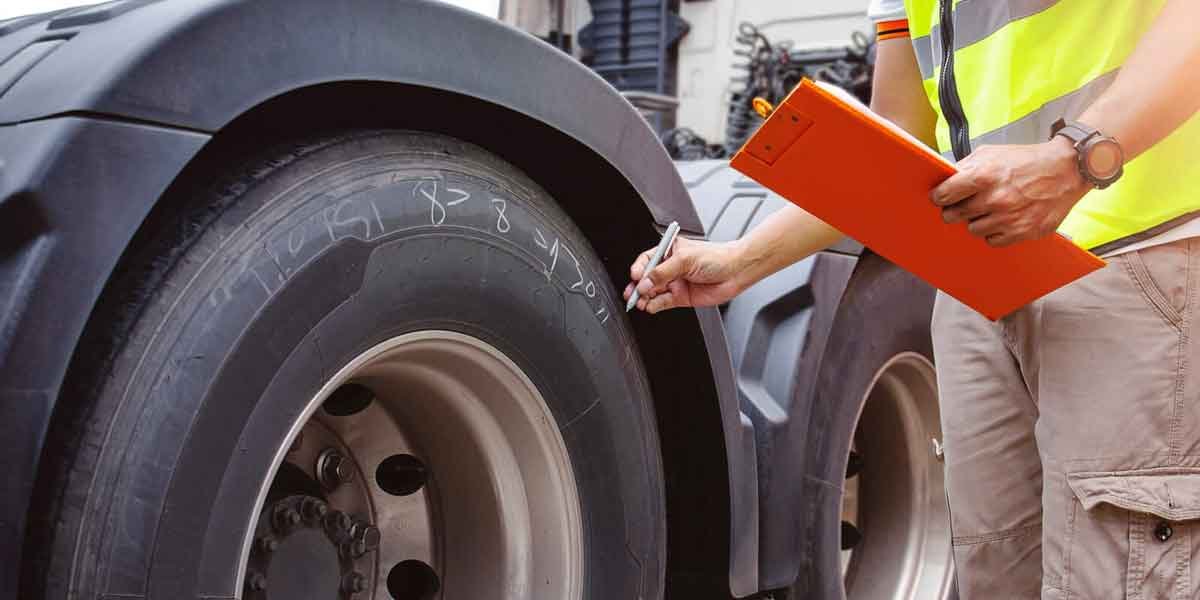
Trailers don’t provide any active feedback, such as warning lights, sounds or vibrations, to alert the driver to an issue. They just sit there and behave as if everything is fine until something gives. With that in mind, what can you do to ensure your trailer stays under your control as it should be?
The Problem With Passive Ownership
Many trailer owners only appreciate how low their trailer’s ride height has become when they try to reverse up a steep gutter and hear things being gouged. That’s a sure sign the trailer is overloaded or that the springs are weakened.
The owner’s manual will provide steer on how much the trailer weighs, but remember that you’re unlikely to be towing just the trailer. Rim ratchet straps, a jockey wheel, spade, the baby’s stroller, fridge, and fly rod will all be exerting a downward force on the towball. As will that jockey stand when picking the trailer up.
Sitting Still Causes More Damage Than Moving
Here is something that might surprise you: a trailer that has been in storage for three months can be in worse condition than a regularly used one.
When a trailer just sits, the grease in the wheel bearings separates and loses viscosity. The tyre sidewalls get dry rot, you’ll see the cracks in the rubber go deep even though the tread looks fine. Brake calipers seize from corrosion. Wiring looms, already under assault from UV, degrade further at the terminals. On boat trailers, the salt that needs to be hosed out of the leaf springs and frame keeps attacking them.
As a result, the departure on that first trip is statistically one of the most dangerous you’ll ever make. Mechanical failure due to long-term storage, particularly tyre blowouts and bearing seizures, is a measurable cause of light trailer accidents on the public road (NRMA). The cure is not rocket science, but it does require you to actually look at the thing before you hook up.
The Heat Check: Your Only Diagnostic Tool
New tow vehicles boast thermal cameras, proximity sensors, and engine management systems. Your trailer doesn’t have any of that. The only early-warning system you have available is a manual inspection, and one of the best techniques in the book is the heat check.
About 20 or 30 kilometres into a trip, pull over safely and run the back of your hand near each hub and rim. Not touching, just close enough to feel radiant heat. A failing bearing will run much hotter than the others. A dragging brake will also heat up. If one side feels significantly warmer, don’t ignore that. That’s not normal operational heat. That’s a component telling you it won’t last the trip.
The same goes for trailer brakes, hydraulic or electric actuators are checked the same way as a full circuit, not whether the brakes engage, but if they’re releasing cleanly, and applying evenly across both sides. An unevenly releasing brake is one of the faster ways to destroy a tyre or throw a load.
Electrical Systems Fail Slowly, Then all at Once
One of the main reasons drivers get pulled over when towing a trailer is due to lighting and signaling faults. Often, the issue is not the lights themselves but the wiring, which causes terminal corrosion to develop over time. This results in increased resistance within the circuit. Although the plug may look visually fine, the signal voltage that reaches the rear lights is insufficient for reliable activation.
Prior to the season starting, conduct a thorough continuity test on the wiring loom. Testing the actual tail voltage with a multimeter can identify if there is a significant drop in voltage between the vehicle socket and the trailer plug due to resistance from corrosion. This issue will only exacerbate unless the plugs and connectors are replaced. Luckily, these are relatively low cost, especially when compared to the cost of a fine for a faulty indicator or the liability resulting from a rear-end collision caused by a missing brake light.
The breakaway system also needs to be checked for the same reasons. In the event of the trailer becoming disconnected from the tow vehicle, the breakaway battery is responsible for activating the brakes. However, a flat or degraded breakaway battery is typically a problem that goes unnoticed until it’s too late.
Coupling and Load Distribution are Underrated
Each time you use the trailer, you handle the coupling mechanism. However, that’s not regular enough to prevent the coupling’s head from wearing faster than it should. Increased play in the coupling head or handle doesn’t seem like a handling problem, but under braking or on a downhill run it is. The jockey wheel (yes, we’d go electric if ours wasn’t always seized with neglect) is in the same category. You probably only use it once per trip, and the one time you forget about it is the one time you rip it off being a tight-ass turning around in a mate’s driveway.
Load distribution is a compound problem. A load even slightly too far backwards lifts weight off the coupling, causing the front axle/tyre to skit sideways and the whole outfit to sway. Too far forward and you’re overweighting the coupling and the rear suspension of the tow vehicle. Both situations are not neutral. They hammer tyres, leaf springs, and bearings potentially taking out the tow vehicle as well.