



Why Is My AC Coil Freezing Up? 5 Causes and How to Thaw and Fix It
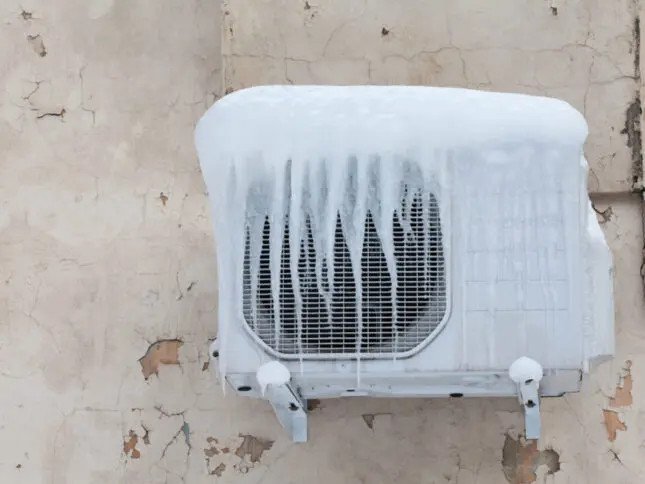
An AC evaporator coil that is covered in ice has lost either airflow or refrigerant. The coil depends on a steady stream of warm return air to keep its temperature above freezing. When that airflow drops — because the filter is clogged, the blower motor is failing, or the return vents are blocked — the coil temperature drops below 32°F. Condensation on the coil freezes. The ice layer grows, blocks more airflow, drops the coil temperature further, and the cycle feeds on itself until the coil is a solid block of ice. Alternatively, when the refrigerant charge is too low, the refrigerant boils at a temperature far below freezing inside the coil, and ice forms even with normal airflow. The cause is always inadequate airflow or inadequate refrigerant. There are no other causes.
A frozen coil is not cooling the house. The ice insulates the coil from the warm return air, so the refrigerant cannot absorb heat. The compressor continues to run, pulling the coil temperature lower and thickening the ice. The air from the registers feels warm and humid because it is passing through a block of ice, not a cold coil. The compressor is being damaged by liquid refrigerant returning through the suction line — a condition called liquid slugging that destroys the compressor’s internal valves. The system must be shut off, the ice must thaw completely, and the root cause must be fixed before the AC is restarted.
How to Safely Thaw a Frozen AC Coil
- Turn the thermostat to OFF and the fan to ON. This stops the compressor but keeps the blower running. Warm return air flowing across the frozen coil — without the compressor making it colder — is the fastest way to thaw. Thawing takes 1 to 4 hours depending on the ice thickness.
- Do not chip at the ice. A screwdriver or an ice pick will puncture the coil, the drain pan, or the refrigerant lines. A punctured evaporator coil is a $600 to $1,200 repair. A punctured refrigerant line releases the entire charge and costs $500 to $1,500 to repair and recharge.
- Place towels under the air handler. The melting ice will produce more water than the condensate drain pan can hold in a short period. Towels prevent water damage to the floor or the ceiling below an attic unit.
- Check the condensate drain before restarting. The flood of meltwater can overwhelm a partially clogged drain. Pour a cup of water into the drain pan and verify it drains freely before restarting the AC.
- Fix the root cause before restarting. If the filter was dirty, replace it. If the coil was dirty, clean it. If neither fixes it and the coil freezes again, the refrigerant charge is low.
1. Restricted Airflow: Dirty Filter, Blocked Returns, Closed Registers
The single most common cause of a frozen AC coil is a dirty air filter. When the filter is packed with dust and debris, the airflow across the coil drops. The refrigerant inside the coil absorbs less heat from the reduced airflow, the coil temperature falls, and ice forms. A filter that looks “not that dirty” can reduce airflow by 20% to 30% — enough to freeze the coil on a mild day when the system runs for long cycles. Replace the filter immediately if it has been more than 30 days since the last change.
After replacing the filter, check two more airflow restrictions. Walk through the house and verify that every return grille is unobstructed — no couch pushed against it, no rug draped over a floor return, no closed door to a room that has the only return. A blocked return starves the blower of air, and the blower can only move the air that reaches it. Verify that every supply register is open. Closing registers in unused rooms increases the static pressure in the duct system, reduces total airflow, and can freeze the coil. The system was designed to operate with all registers open.
2. Dirty Evaporator Coil: The Air Cannot Reach the Metal
The evaporator coil itself can become so coated with pet hair, lint, and household dust that air cannot flow through the coil fins. The filter catches most of the airborne debris, but fine particles pass through even a clean filter and accumulate on the wet coil surface over years. A heavily fouled coil has the same effect as a dirty filter: reduced airflow, reduced heat absorption, dropping coil temperature, and ice formation.
A dirty coil cannot be cleaned by changing the filter. The coil must be cleaned directly. Access the coil by removing the air handler or furnace access panel. If the coil face is covered with a mat of gray dust and lint, spray it with a foaming coil cleaner ($10 to $20 at a hardware store). The foam expands into the coil fins, lifts the debris, and drains into the condensate pan. For heavy buildup, a technician with a pump sprayer and professional coil cleaning chemicals is the better option. A professional coil cleaning costs $100 to $200 as part of a tune-up.
3. Failing Blower Motor: The Fan Is Spinning but Not Moving Enough Air
A blower motor that is failing — running at reduced speed, starting intermittently, or not starting at all — starves the evaporator coil of airflow. The coil freezes within minutes of the compressor starting. A failing ECM blower motor may run at a reduced speed that still produces some airflow but not enough to keep the coil above freezing. The homeowner notices weak airflow from the registers and a frozen coil.
Listen to the air handler when the system starts. A blower that hums but does not spin has a failed capacitor ($150 to $300) or a seized motor ($400 to $800). A blower that starts slowly, runs for a few minutes, and stops has an overheating motor. A blower that makes a squealing or grinding noise has failing bearings. All of these conditions reduce airflow and can freeze the coil. Turn the AC off until the blower is repaired. Running the compressor with a failed blower guarantees a frozen coil and risks compressor damage from liquid slugging.
4. Low Refrigerant: The Most Serious Cause
When the refrigerant charge is low — because of a slow leak at a brazed joint, a Schrader valve, or the evaporator coil itself — the pressure inside the coil drops. Lower pressure means a lower boiling point. The refrigerant that should be boiling at 40°F is now boiling at 25°F. The entire coil operates below freezing, and ice forms on the entire coil surface, not just in one area.
The pattern for a refrigerant-related freeze is different from an airflow-related freeze. With low refrigerant, the ice starts at the bottom of the coil or at the point where the refrigerant enters, and the suction line at the outdoor unit is frozen. With an airflow problem, the ice covers the coil uniformly, and the suction line may be cold but not frozen. A system that is low on refrigerant will typically cool adequately for the first 20 to 30 minutes, then the cooling output drops as the ice layer grows. The ice insulates the coil, the coil gets colder, and the ice thickens.
Air conditioners are sealed systems. Refrigerant does not get used up. If the charge is low, there is a leak somewhere. Adding refrigerant without finding and repairing the leak is a temporary fix that guarantees the leak will return — and the next time, the refrigerant level will be even lower when the system fails. An EPA-certified technician must locate the leak with an electronic detector or UV dye, repair it, evacuate the system, and recharge to the precise weight on the nameplate. Leak repair and recharge costs $500 to $1,500.
Airflow freeze vs. refrigerant freeze — how to tell the difference: An airflow freeze covers the entire coil uniformly and often starts at the top where the air enters. The suction line at the outdoor unit is cold but not frozen. The fix is the filter, the coil cleaning, or the blower motor. A refrigerant freeze starts at the point where the refrigerant enters the coil (usually the bottom or one end) and spreads from there. The suction line is frozen. The air from the registers was cooling normally and then got gradually warmer over days or weeks. The fix is a technician with leak detection equipment.
5. Running the AC When Outdoor Temperatures Are Too Low
Air conditioners are designed to operate within a specific outdoor temperature range — typically above 60°F. When the outdoor temperature drops below 60°F, the condenser coil rejects heat too efficiently. The refrigerant entering the evaporator coil is already so cold that the coil temperature drops below freezing even with normal airflow. Running the AC on a 50°F spring evening produces a frozen coil.
If cooling is needed when outdoor temperatures are below 60°F — for server rooms, wine cellars, or commercial kitchens — the outdoor unit needs a low-ambient kit: a condenser fan speed control or a head pressure control valve that reduces the condenser’s heat rejection to match the lower outdoor temperature. A low-ambient kit costs $300 to $600 installed. Without it, do not run the AC below 60°F.
FAQ: Common Questions About Frozen AC Coils
I thawed the coil and replaced the filter, but it froze again the next day. What now?
The freeze is refrigerant-related, not airflow-related. A clean filter should have solved an airflow freeze. A freeze that returns within a day or two with a clean filter and all registers open means the refrigerant charge is low. The system has a leak. Call an HVAC technician. Continuing to run the AC and letting it freeze repeatedly will destroy the compressor. Each freeze-thaw cycle sends liquid refrigerant back to the compressor, and liquid destroys a compressor designed to pump gas.
Why is only part of my coil frozen?
A partially frozen coil — ice on the bottom half or one side only — is a classic sign of low refrigerant. The refrigerant enters the coil at one point and flashes to a gas almost immediately because the pressure is too low. That section of the coil drops below freezing while the rest of the coil is cold but above freezing. A uniformly frozen coil is an airflow problem. A partially frozen coil is a refrigerant problem.
Fix the Airflow First, Then Call a Technician If It Freezes Again
An AC coil that freezes has lost airflow or refrigerant. Replace the filter, clean the coil, open all the registers, and check the returns. Thaw the coil completely — run the fan only on high speed for 1 to 4 hours. Restart the AC. If the coil freezes again within days with a clean filter and unrestricted airflow, the refrigerant charge is low. The system has a leak, and a technician must find it, repair it, and recharge the system.
The filter costs $10. The coil cleaning costs $20 for a can of spray foam. The technician’s leak repair costs $500 to $1,500. The compressor replacement that results from ignoring a recurring freeze costs $1,200 to $2,500. The $10 filter and the $20 spray foam are the cheapest insurance in HVAC. Start there. If they do not stop the freeze, the money you spend on the technician is still less than the compressor replacement you are avoiding.