


Why Is My AC Condenser Freezing Up? Outdoor Unit Ice Causes and Fixes
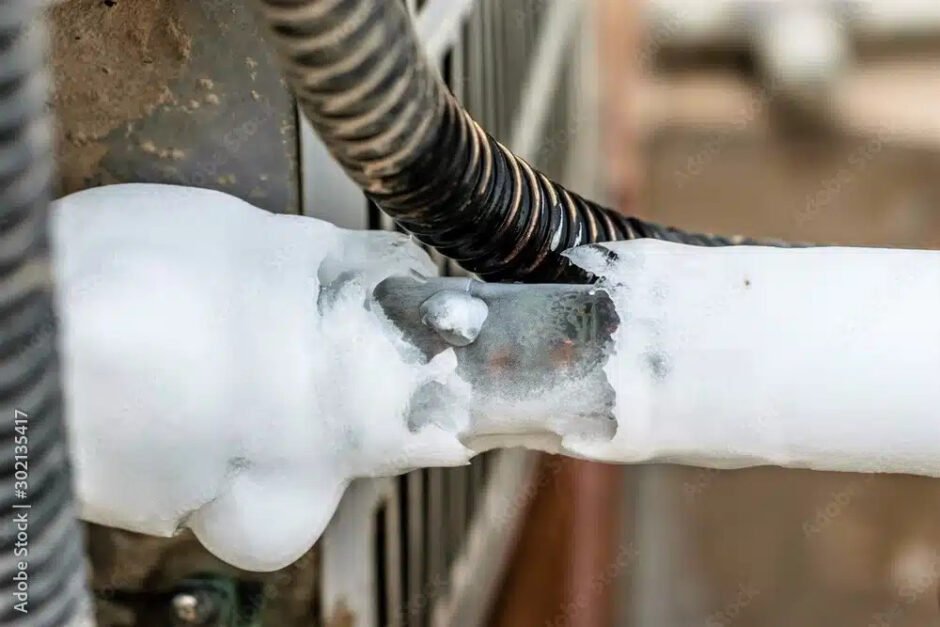
An AC condenser — the outdoor unit — that is covered in frost or ice is almost always the result of the compressor running when the outdoor temperature is too low, the condenser coil is so dirty that heat cannot escape, the refrigerant charge is critically low, or the homeowner is actually looking at a frozen evaporator coil inside the house and calling it by the wrong name. The outdoor condenser coil is designed to run hot in cooling mode. Ice on the outdoor unit is abnormal and, in most cases, means the compressor is being damaged every minute it continues to run.
The first diagnostic step is to identify which outdoor component is frozen, because each points to a different cause. Frost on the suction line — the larger copper pipe wrapped in black foam insulation — means the indoor evaporator coil is frozen and the cold is traveling through the refrigerant back to the outdoor unit. Frost on the compressor housing means liquid refrigerant is entering the compressor, a condition called slugging or liquid floodback, which destroys the compressor. Frost on the condenser coil fins themselves — rare in cooling mode — means the system is running in conditions it was not designed for, or the metering device is malfunctioning. Frost everywhere on the outdoor unit, with the fan blowing cold air, is the system stuck in heat pump defrost or running when it is too cold outside.
When moisture on the evaporator coils transforms into ice, the entire cooling cycle effectively grinds to a halt. This often occurs because restricted airflow prevents warm indoor air from reaching the refrigerant, leading to a rapid internal temperature drop. Homeowners who notice a sudden lack of cold air should take a moment to view it now before the frost spreads to the outdoor unit. While a simple filter change might resolve minor issues, persistent ice buildup typically indicates a more significant mechanical failure or a chemical imbalance within the system. Addressing these early signs helps avoid the expensive reality of a total compressor breakdown during the peak of summer.
Are You Sure It Is the Condenser? The Evaporator vs. Condenser Confusion
Many homeowners use the word “condenser” to refer to the entire air conditioning system, not knowing that the condenser is specifically the outdoor unit. When they say “my condenser is freezing up,” they often mean “my air conditioner is freezing up” — and the ice they are seeing is on the indoor evaporator coil or the refrigerant lines, not on the outdoor condenser. This distinction matters because a frozen evaporator coil and a frozen condenser coil have different causes and different fixes.
| What Is Frozen | Where You See It | Most Likely Cause | Article Reference
|
| Indoor evaporator coil | Inside the air handler or furnace | Dirty filter, low airflow, low refrigerant | See “AC pipe freezing” article |
| Suction line at outdoor unit | Large insulated copper pipe outside | Evaporator coil frozen — cold traveling back | Same cause as frozen evaporator |
| Outdoor condenser coil | Metal fins on the outdoor unit | Low outdoor temp, restricted airflow, severe low charge | This article |
| Compressor housing | The metal dome inside the outdoor unit | Liquid refrigerant floodback — compressor damage | Emergency — shut off immediately |
If you open the indoor air handler or furnace and see ice on the metal fins inside, the problem is a frozen evaporator coil, not a frozen condenser. The fix involves the air filter, the blower motor, or the refrigerant charge — the same causes covered in detail in this site’s article on why AC pipes freeze. If the ice is exclusively on the outdoor unit, the causes below apply.
Quick test: Go to the outdoor unit and look at the two copper pipes entering it through the side panel. The larger pipe (the suction line, wrapped in black insulation) should feel cold and sweaty, not frozen. The smaller pipe (the liquid line, bare copper) should feel warm. If the large pipe is frozen and the small pipe is cold instead of warm, the refrigerant charge is severely low. If both pipes are at the same temperature and neither is warm, the compressor may not be running at all.
1. Running the AC When It Is Too Cold Outside
The outdoor condenser coil is designed to reject heat to the outside air. When the outdoor temperature falls below roughly 60°F, the condenser is too efficient. The refrigerant entering the evaporator coil inside the house is already so cold that the indoor coil freezes. The cold propagates back through the suction line to the outdoor unit, and frost appears on the suction line, the compressor, and eventually the condenser coil itself.
This is the most common cause of frost on the outdoor unit in spring and fall, when a homeowner runs the AC on a mild 55°F evening. The fix is to not run the AC when the outdoor temperature is below 60°F. While many homeowners focus on their cooling units during the spring and summer, it is equally important to consider the overall health of the entire heating and cooling system. As temperatures begin to drop later in the year, ensuring that your heating unit is prepared for the upcoming seasonal transition can help you avoid unexpected mechanical failures. For those who want to stay ahead of potential issues, finding a reliable provider for furnace repair near me is a practical way to maintain consistent indoor warmth. Regular inspections and early adjustments to the heating components support a seamless transition between seasons and contribute to long-term system stability.
If cooling is needed in low ambient conditions (server rooms, wine cellars, commercial kitchens), the outdoor unit must be equipped with a low-ambient kit — a condenser fan speed control or a head pressure control valve — that reduces the condenser’s heat rejection to match the lower outdoor temperature. A low-ambient kit costs $300 to $600 installed.
2. Dirty or Blocked Outdoor Condenser Coil
The condenser coil rejects the heat that the refrigerant absorbed from inside the house. When the coil is matted with cottonwood fluff, grass clippings, dryer lint, or years of caked-on dirt, the heat cannot escape. The refrigerant stays hotter than normal, the compressor works against higher pressure, and the system’s cooling capacity drops. In severe cases, the condenser coil is so clogged that the refrigerant cannot condense properly, and the pressure and temperature throughout the system become abnormal. The compressor may overheat and cycle on its thermal overload, or frost may form on the suction line and the compressor housing as refrigerant boils at the wrong point in the circuit.
Clean the condenser coil at the start of every cooling season. Turn off power at the disconnect box near the outdoor unit. Remove the screws securing the outer grille or the fan assembly on top of the unit. Spray the coil from the inside outward with a garden hose — never a pressure washer, which folds the aluminum fins flat. Straighten any bent fins with a fin comb ($8 to $15). Clear all vegetation, leaves, and debris within 2 feet of the unit on all sides.
3. Critically Low Refrigerant Charge
A refrigerant charge that is severely low — not just slightly low — produces ice on the outdoor unit. When the system has lost 30% to 50% or more of its refrigerant charge, the pressure inside the evaporator coil is so low that the refrigerant boils at a temperature far below freezing. The coil becomes a solid block of ice. The ice propagates through the suction line back to the outdoor unit, where it frosts the compressor housing and eventually the condenser coil. The compressor is now pumping liquid refrigerant — which does not compress — instead of refrigerant gas. Liquid slugging destroys the compressor’s internal valves, pistons, and bearings.
A system with frost on both the indoor coil and the outdoor unit is critically low on refrigerant. Operating a system in this state risks causing severe mechanical issues that can permanently compromise the compressor. When a complete system breakdown happens unexpectedly during a heatwave, finding a fast solution becomes a major priority. Homeowners facing sudden cooling failures often need to seek emergency ac repair to safely assess the unit and prevent further internal damage. Addressing these problems early helps protect the system’s vital components and ensures the household returns to a comfortable indoor temperature quickly. Shut the system off immediately. Do not restart it. An EPA-certified technician must locate the leak, repair it, evacuate the system, and recharge it to the precise weight specified on the nameplate. Leak repair and recharge costs $500 to $1,500. Running the system with frost on the outdoor unit will destroy the compressor, adding $1,200 to $2,500 to the repair cost.
4. Failed Metering Device: Too Much Refrigerant to the Evaporator
The metering device — a TXV (thermostatic expansion valve) or a piston orifice — controls how much refrigerant enters the evaporator coil. When the metering device fails in the open position, it allows too much refrigerant into the evaporator. The coil floods with liquid refrigerant that does not fully evaporate. The liquid refrigerant travels through the suction line back to the compressor, where it boils on the outside of the compressor housing and produces frost.
A failed TXV that is stuck open produces a distinctive set of symptoms: the suction line is colder than normal, frost forms on the compressor, the system’s cooling capacity is reduced because the flooded coil cannot absorb heat efficiently, and the compressor may be noisier than normal due to liquid slugging. TXV replacement costs $400 to $800 and requires recovering the refrigerant, brazing in the new valve, evacuating the system, and recharging.
5. Heat Pump Stuck in Defrost Mode or Running in Winter
A heat pump in heating mode reverses the refrigeration cycle: the outdoor coil becomes the evaporator (absorbing heat from the outdoor air) and the indoor coil becomes the condenser (releasing heat into the house). In cold weather, frost naturally forms on the outdoor coil as it extracts heat from air that is below freezing. The heat pump periodically runs a defrost cycle to melt this frost, briefly switching back to cooling mode (outdoor coil becomes the condenser, melting the ice).
Frost on a heat pump’s outdoor coil in winter is normal. The defrost cycle should clear it within 5 to 15 minutes. Ice that builds up and does not melt between defrost cycles means the defrost control board, the defrost thermostat, or the reversing valve has failed. The heat pump cannot defrost itself, and the ice layer grows until it blocks airflow entirely and damages the outdoor coil fins. A heat pump encased in ice requires a technician to diagnose the defrost system failure. The unit can be manually defrosted by switching to emergency heat (electric resistance backup) or by running the AC in cooling mode for 15 to 30 minutes — which is the same thing the defrost cycle does automatically when it is working.
FAQ: Common Questions About Frozen AC Condensers
Can an AC condenser freeze on a hot day?
Yes, but it indicates a severe problem. On a 95°F day, the outdoor condenser coil should be hot — roughly 105°F to 120°F. Ice on the outdoor unit on a hot day means the refrigerant charge is critically low, the metering device has failed, or the compressor is not pumping adequately. The outdoor coil cannot freeze from the outdoor air temperature on a hot day. The cold is coming from inside the refrigerant system, and it means the refrigerant is boiling at the wrong point in the circuit. Shut the system off and call a technician.
Why is only the compressor frozen, not the rest of the outdoor unit?
Frost on the compressor housing alone — with the condenser coil and the suction line at normal temperatures — is liquid refrigerant floodback. Liquid refrigerant is entering the compressor and boiling on the outside of the compressor dome. This is most commonly caused by a TXV stuck open or an evaporator fan that is not running (in a system where the compressor runs but the indoor blower does not). The compressor is being destroyed by liquid slugging. Shut the system off immediately and call a technician.
Ice on the Outdoor Unit Means the Compressor Is in Danger
A frozen AC condenser is not a normal operating condition under any circumstances — except for a heat pump in winter, where frost between defrost cycles is expected. In cooling mode, ice anywhere on the outdoor unit means the compressor is pumping liquid refrigerant, the system’s pressures are abnormal, and every minute of runtime is causing mechanical damage that accumulates until the compressor fails.
If the outdoor unit is frozen, shut the system off at the thermostat and at the disconnect box. Do not run the AC again until the cause has been diagnosed and repaired. The most common cause — running the AC in cool weather — is fixed by simply waiting for warmer weather or installing a low-ambient kit. The more serious causes — low refrigerant, a failed metering device, or a defrost system failure on a heat pump — require a technician. The diagnostic visit costs $100 to $200. Catching these mechanical problems early can preserve the operational life of the equipment and help maintain consistent indoor comfort. When a cooling system undergoes unexpected strain from low refrigerant or restricted airflow, it forces the compressor to work much harder, lowering the unit’s overall efficiency. Property owners who notice these warning signs should consult a professional to ensure small issues do not lead to complete system failure. For residents dealing with freezing coils or regular malfunctions, finding a dependable service provider for ac repair hiram can restore proper airflow and ensure the entire setup functions safely throughout the warmer months. The compressor replacement that results from ignoring the ice costs $1,200 to $2,500.