


Why Condensation Forms Around Ceiling HVAC Vents
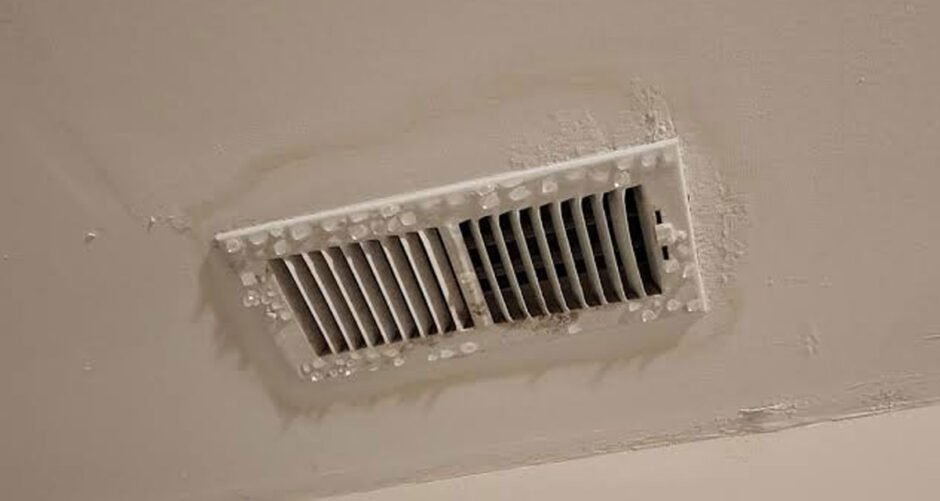
Condensation around ceiling HVAC vents is usually a sign that cold surfaces are coming into contact with warm, humid air. While some cases are minor, recurring moisture can point to insulation, airflow, humidity, or ductwork problems that may require AC repair.
Causes Of Condensation On AC Vent Surfaces
Condensation forms on an AC vent when the vent surface becomes colder than the dew point of the surrounding air. In practical terms, warm, moisture-laden air touches the cold metal register or nearby ceiling surface, and some of that moisture changes into liquid water. This is the basic process behind condensation on AC vent surfaces.
Ceiling vents are especially prone to this because they often sit directly beneath a hot attic or other unconditioned space. If warm attic air leaks around the vent boot, or if the boot and nearby ductwork are poorly insulated, the temperature difference can be large enough for visible moisture to collect around the grille. High indoor humidity, air leaks, inadequate insulation, and unusually cold supply air can all contribute to AC vent condensation.
The location of the moisture can offer clues. Water on the grille face often develops from room air contacting the cold register, while condensation around AC vents that is concentrated near the outer edge can be associated with air leakage or insulation gaps around the boot.
Why Condensation At AC Vents Worsens In Humid Weather
Hot, humid weather puts more moisture into the air, raising its dew point. That means a surface does not have to become extremely cold before condensation begins. As a result, condensation at AC vents is often more noticeable during periods of high outdoor humidity.
During summer, an AC system may also run for longer periods and deliver a steady stream of cold air through the vents. At the same time, attics and other unconditioned spaces can become very warm and humid. A ceiling register positioned between cold conditioned air below and hot, damp attic air above can therefore become an ideal condensation point and increase the likelihood of condensation from AC vent areas.
The weather pattern can sometimes help identify the source. Condensation that worsens after rain or during muggy mornings may be strongly influenced by humidity. Moisture that appears primarily after the AC has operated continuously for several hours may also involve unusually cold surfaces, insulation deficiencies, or airflow conditions. Tracking when condensation at AC vents develops can help narrow down the cause.
How Cold Air And Insulation Cause AC Vent Condensation
These conditions often work together. Cold supply air cools the register, vent boot, and nearby materials. Warm attic air can reach those cold surfaces through small gaps around the boot or ceiling opening. If the duct or boot does not have enough insulation, the surrounding heat and moisture reach the cold surface more easily, increasing the risk of AC vent condensation.
Problems often occur at small weak points rather than across the entire duct system. A compressed section of insulation, exposed corner of a metal boot, torn vapor jacket, poorly insulated connection, or unsealed ceiling penetration can create one surface that repeatedly falls below the dew point.
This explains why one ceiling vent may sweat while another vent only a few feet away remains dry. Local installation details can matter as much as the overall condition of the HVAC system. In many cases, condensation on AC vent surfaces is therefore caused by a localized insulation or air-sealing issue rather than a problem affecting every vent in the home.
What Condensation Around AC Vents Reveals About Humidity
Occasional light condensation during extremely humid weather may simply indicate that indoor moisture levels are temporarily elevated. Repeated or heavy condensation around AC vents deserves closer attention because it can point to a broader moisture or HVAC issue.
Condensation indicates that moisture levels and surface temperature have crossed the dew-point threshold somewhere around the vent. A humidity reading by itself does not always explain the problem.
A home can feel cool while still containing enough moisture for a cold register to sweat. This can happen when an AC system cools the space faster than it removes humidity, when outside air is entering the building, or when moisture production inside the home is unusually high. In those situations, condensation on AC vent surfaces may continue even when the indoor temperature feels comfortable.
Ceiling Damage From Condensation From AC Vent Areas
Once condensation forms repeatedly, water can soak into drywall, ceiling texture, paint, insulation, or surrounding framing. Even small amounts of condensation from AC vent areas can create visible yellow or brown staining over time.
Persistent dampness can also support mold growth, particularly on dusty vent surfaces, drywall paper, insulation, or other porous materials. Paint may blister or peel, ceiling material may soften, and metal components can begin to corrode.
The amount of visible water does not always reflect the full extent of the moisture problem. Water can travel along a duct boot or absorb into ceiling materials before a stain becomes noticeable from inside the room. This is one reason condensation around AC vents should not be ignored when staining or dampness keeps returning.
Repainting the ceiling without correcting the moisture source often allows the stain to return.
Why Condensation Dripping From AC Vent Happens
Dripping usually means enough moisture is accumulating that it can no longer remain as a thin film on the vent. Heavy condensation on the register, duct boot, or nearby ductwork may eventually collect into droplets and fall into the room. When condensation dripping from AC vent openings occurs repeatedly, the underlying source should be identified rather than simply wiping the vent dry.
There are also cases where water reaching the vent is coming from somewhere else. A poorly insulated duct may sweat above the ceiling and allow water to run toward the register. Condensation can develop on ductwork above the ceiling and travel toward the lowest point of the boot. Water may also run along internal duct surfaces or collect around seams before reaching the opening.
A clogged condensate drain, cracked drain pan, poorly pitched drain line, sweating ductwork, air leakage around the vent boot, or damaged duct insulation can all produce water near a ceiling vent. For that reason, repeated condensation dripping from AC vent areas should not automatically be treated as simple surface condensation.
If water continues to appear even when humidity is moderate, condensation from AC vent components above the ceiling may be involved rather than moisture forming only on the visible grille.
When AC Vents Condensation Signals A Bigger Problem
A small amount of moisture that appears only during exceptionally humid weather and disappears once humidity falls may be relatively minor. The vent and surrounding ceiling should dry completely, and the moisture should not leave stains or return regularly under normal conditions. Occasional AC vents condensation during unusually muggy weather may therefore be temporary.
A larger problem is more likely when condensation occurs frequently, affects multiple vents, produces active dripping, causes staining, leaves the ceiling damp, or returns even when indoor humidity is reasonably controlled. Other warning signs include musty odors, visible mold, weak airflow, unusually high cooling bills, rooms that are difficult to cool, or moisture appearing around attic ductwork.
A useful indoor humidity target for many air-conditioned homes is roughly 30% to 50%, although conditions vary by climate and building design. If AC vents condensation continues while indoor humidity is within a normal range, insulation, air leakage, ductwork, or HVAC operation becomes more important to investigate.
Frequency, location, timing, and the amount of water are useful indicators. A single affected register can point toward a local boot, insulation, or air-sealing defect. Multiple affected vents can suggest a broader moisture-control or HVAC issue.
Homeowners can also compare when the problem occurs. Moisture that appears after showers or cooking may be influenced by indoor humidity. Condensation that develops during long cooling cycles may be more closely related to surface temperature, airflow, or insulation. Water that appears even when the AC has not been running may have another source entirely. These patterns can help distinguish routine AC vents condensation from a more serious drainage, duct, or moisture problem.
Preventing Condensation Around AC Vents
Reducing condensation usually requires keeping the vent surface above the dew point, lowering the moisture level of the surrounding air, or preventing humid air from reaching the cold surface. These steps can reduce both condensation at AC vents and moisture forming around the surrounding ceiling.
Start by controlling indoor humidity and keeping doors and windows closed while the air conditioner is operating. Bathroom and kitchen exhaust fans should vent moisture outdoors, and a properly sized dehumidifier can help in homes that remain humid despite normal AC operation.
The vent boot should also be sealed where it meets the ceiling so humid attic air cannot leak through surrounding gaps. HVAC-rated sealants or approved sealing materials are generally more appropriate than relying on the decorative register to close the opening.
Ducts and boots located in attics or other unconditioned spaces should have continuous, properly installed insulation with an intact vapor barrier. Damaged or missing insulation should be repaired rather than simply covered. Proper insulation can significantly reduce condensation from AC vent boots and nearby duct surfaces.
Airflow problems should be corrected as well. Dirty filters, obstructed returns, closed registers, incorrect blower settings, or other restrictions can affect HVAC operation and surface temperatures. Correcting these conditions can help limit AC vent condensation when unusually cold vent surfaces are part of the problem.
Persistent condensation should not be addressed by adjusting the thermostat alone. Setting the thermostat substantially warmer may reduce surface condensation while leaving an underlying insulation, humidity, or duct leakage problem unresolved.
When AC Vent Condensation Needs Professional Inspection
Professional inspection is appropriate when condensation keeps returning, water drips from the vent, ceiling stains are spreading, insulation is wet, mold is visible, or several vents are affected. Repeated condensation dripping from AC vent openings is particularly important to investigate because water may be forming elsewhere in the duct system before reaching the register.
It is also worth arranging an inspection when the system has weak airflow, runs unusually long, struggles to control humidity, shows unexplained increases in energy use, or shows signs of a condensate drainage problem.
An HVAC technician can check supply-air temperature, airflow, duct leakage, insulation condition, vent-boot sealing, condensate drainage, refrigerant-related performance, and other operating conditions that are difficult to diagnose from the register alone. A technician can also compare indoor dew point with register and duct temperatures and inspect insulation and vapor barriers. Those measurements can distinguish a simple surface-condensation problem from a duct, humidity-control, or HVAC performance issue.
Persistent moisture around a ceiling vent should be addressed before repairing or repainting the ceiling. Correcting the source first helps prevent the stain, mold, or material damage from returning, especially when condensation at AC vents has become a recurring problem.