



How Pollen Seasons Are Shaping Daily Life in Texas
Introduction
For residents of Texas, seasonal allergies are far more than a temporary inconvenience. Instead, these allergies pose ongoing challenges due to the state’s varied ecology and climate. The continuous presence of pollen affects people from the Rio Grande Valley to the Hill Country and every metropolitan hub in between. As more people seek information and solutions, it’s clear that understanding Texas seasonal allergies is essential for navigating life in this region. The American Sinus Institute, featured in the linked resource, breaks down the most common culprits behind Texas’s notorious allergy seasons. With extensive expertise in treating sinus and allergy conditions across major Texas cities like Houston and Dallas, the American Sinus Institute provides detailed, authoritative guidance on how local allergy triggers evolve throughout the year and what individuals can do to find relief from year-round symptoms.
Most Texans experience some degree of pollen-driven discomfort, from the sharp bursts of Mountain Cedar in winter to the relentless wave of ragweed in autumn. Rather than waiting for relief after a single pollen-heavy month passes, individuals must remain vigilant. Staying informed on shifting pollen patterns equips families and workers with the knowledge needed to adjust routines, safeguarding health and quality of life across the community.
The Year-Round Pollen Calendar in Texas
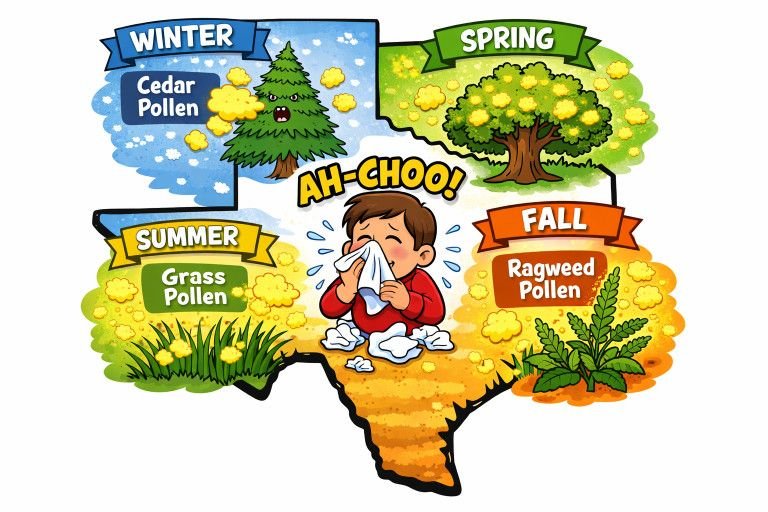
Unlike other regions that may see a slowdown in allergy activity, Texas citizens are exposed to high pollen counts nearly every month. The relentless cycle presents unique challenges:
- Winter (December through February): Mountain Cedar reigns supreme. This juniper species produces dense pollen clouds, prompting an annual surge in “Cedar Fever” cases characterized by sneezing, nasal congestion, headaches, and even mild fevers for many sufferers.
- Spring (March through May): The arrival of spring ushers in a powerful wave of Oak, Pecan, and Elm tree pollen. Oak in particular is notorious for leaving a visible yellow residue on vehicles, patios, and window sills.
- Summer (June through July): Grasses such as Bermuda and Johnson keep the pollen index elevated well into the warmest months. Though often overlooked, these grasses can be a stealth trigger for allergy flare-ups.
- Fall (August through November): Ragweed pollen dominates the air. Just one ragweed plant can produce a billion grains of pollen in a season, making it the undisputed fall allergen champion for Texans, whether in rural or urban environments.
For more on how these cycles compare nationally and to track real-time pollen activity, individuals turn to broader allergy-tracking resources from well-established health sites. WebMD provides a comprehensive overview of pollen activity timing and types across various U.S. regions.
Impact on Health and Daily Activities
The health effects of pervasive pollen exposure reach far beyond a runny nose. Texans contend with a variety of symptoms that influence decisions, both big and small, every day.
- Health Implications: Elevated pollen can worsen asthma, chronic sinusitis, and allergic rhinitis. Symptoms may escalate to persistent sinus pain, watery or itchy eyes, persistent coughing, and disrupted sleep, especially when preventive measures are not taken.
- Outdoor Activities: High pollen counts can curb time spent in parks, on running trails, or at local sporting events, especially during the Cedar and Ragweed seasons. Children and adults alike may prefer indoor activities on high-pollen-count days, adjust family routines, and limit physical activity.
- Work and Productivity: Ongoing allergy symptoms, including fatigue and brain fog, often contribute to decreased productivity in offices and classrooms. Managing allergies can involve frequent doctor visits, over-the-counter treatments, and missed days at work or school.
According to the Centers for Disease Control and Prevention (CDC), allergies are among the leading chronic illnesses affecting Americans. The unique climate of Texas makes both urban and rural residents especially vulnerable, requiring effective strategies tailored to their environmental realities.
Climate Change and Prolonged Allergy Seasons
Scientific research shows that allergy seasons in Texas are both lengthening and intensifying. Rising average temperatures, coupled with increasing atmospheric carbon dioxide levels, mean longer, more robust growing seasons for trees, grasses, and weeds. This expansion gives pollen-producing plants a greater window to thrive and shed allergens, intensifying the frequency and severity of allergy flare-ups throughout the year.
Texas cities like Austin, San Antonio, and Houston have documented a marked increase in frost-free days since the 1970s. This extends the period during which allergenic plants release pollen, prolonging misery for those susceptible to allergies and making symptom management more challenging.
Managing Indoor Air Quality During Pollen Seasons
Since Texans spend a significant amount of time indoors, especially during high-pollen-count months, controlling indoor environments is a critical line of defense against allergies. Proactive steps can make a noticeable difference in reducing exposure and symptom severity.
Tips for Cleaner Indoor Air
- Replace home HVAC and air conditioning filters regularly, upgrade to high-efficiency particulate air (HEPA) filters if possible, and schedule routine maintenance to ensure vents remain free of accumulated dust and allergens.
- Use portable air purifiers in bedrooms and living spaces, particularly during peak pollen seasons, to capture airborne particles that central filtration systems miss.
- Keep windows and doors shut on high pollen days, especially in the early morning when pollen counts typically peak.
- Clean floors and surfaces frequently with a vacuum equipped with a HEPA filter, and wash bedding weekly in hot water to remove pollen traces brought inside on clothing, shoes, or pets.
Following the New York Times Wirecutter’s recommendations on air cleaners can help families select air purification solutions proven to remove pollen and other allergens effectively.
Conclusion
Texas’s unique mix of geography, climate, and plant life creates a near-constant challenge for allergy sufferers. Understanding the timing and sources of pollen, along with the ways climate change is increasing seasonal severity, enables Texans to take decisive steps to protect their health and lifestyle. Empowered by clear information and supported by expert care, such as that offered by the American Sinus Institute, individuals can keep allergies from dominating their daily routines and maintain a vibrant quality of life year-round.