



How Much Does Air Duct Cleaning Typically Cost? A Realistic Pricing Guide
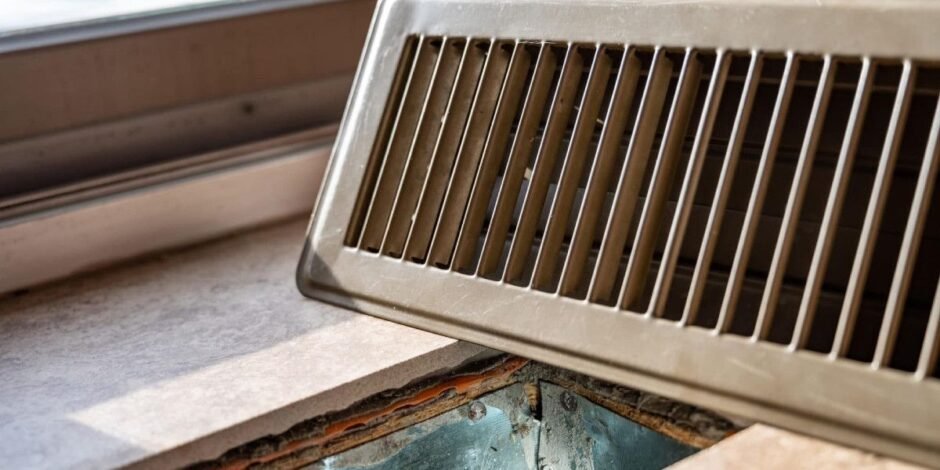
Air duct cleaning typically costs $300 to $700 for a standard single-family home, with the national average clustered tightly around $450. The price is rarely below $250 for a legitimate cleaning and rarely above $1,000 unless the house has multiple HVAC systems, extensive contamination, or the homeowner has agreed to add-on services like sanitizer fogging or mold treatment. The tight clustering around $450 means that quotes above $600 or below $300 should prompt a second opinion — either the scope of work is different, or one of the quotes is not for a complete cleaning.
Unlike roofing or furnace replacement, where prices vary widely by material and region, duct cleaning prices are relatively stable across the country because the equipment is standardized and the labor is predictable: a two-person crew with a truck-mounted vacuum and compressed air tools can clean a typical 15-vent house in 3 to 5 hours regardless of whether the house is in Atlanta or Seattle. The labor rate varies by region, but the time does not. A crew in the Northeast charges $100 to $150 per hour. A crew in the Southeast charges $75 to $100 per hour. The 3-to-5-hour job is the same job, and the $150 to $300 labor difference between markets is the primary driver of the regional price spread.
How Duct Cleaning Companies Price Their Services
Duct cleaning companies use one of three pricing models, and the model determines whether the quote is transparent or designed to conceal the true cost until the technician arrives.
| Pricing Model | How It Works | Typical Cost | Transparency
|
| Per vent | Fixed price per supply vent and return grille | $25-$50 per vent | High — you can count your own vents |
| Per square foot | Price based on home square footage | $0.15-$0.35 per sq ft | Medium — duct length does not perfectly correlate with sq ft |
| Flat rate / package | Single price for the whole house | $300-$700 | Low — must verify what is included in the package |
Per-vent pricing is the most transparent model because the vent count is a fixed, verifiable number. You can count your own supply registers and return grilles before calling, and the quote should match your count within one or two vents.
Per-square-foot pricing favors houses with open floor plans (fewer vents per square foot) and penalizes houses with many small rooms (more vents per square foot).
Flat-rate pricing is the least transparent because the company can set the price based on what they think the market will bear rather than on the specific characteristics of your duct system.
A company that cannot or will not quote a price over the phone — that requires an in-home estimate for a standard duct cleaning — is almost certainly using the estimate visit as a sales opportunity. Duct cleaning is not a custom installation. The vent count and the number of HVAC systems are the only variables, and both can be provided over the phone. A company that needs to “see the job” before quoting for a standard residential duct cleaning is selling something other than duct cleaning.
Count your vents before you call: Walk through every room in the house. Count each supply register (the vent that blows air out) and each return grille (the larger vent that pulls air in). A typical bedroom has one supply vent. A living room may have two or three. The hallway usually has one return. Write down the total. Call three companies and ask: “I have X vents and one HVAC system. What is your total price to clean all supply ducts, all return ducts, the blower wheel, and the evaporator coil?” The company that gives you a firm price with no hesitation is the one to hire.
What Drives the Cost of Air Duct Cleaning Up or Down
Five factors move the price of a duct cleaning away from the $450 average. Each adds or subtracts from the base per-vent or per-square-foot rate.
- Number of HVAC systems. Each additional furnace or air handler adds $100 to $200 because the truck-mounted vacuum must be disconnected from one trunk line and reconnected to another. A house with a separate system for a finished basement is a two-system job.
- Accessibility of the ductwork. Ducts accessible from an unfinished basement or an open attic are easy to clean. Ducts buried in finished ceilings, behind drywall, or in crawlspaces with less than 18 inches of clearance are difficult. A house with inaccessible ducts may require cutting access panels into the ductwork (an additional $50 to $100 per access hole, patched afterward).
- Contamination level. The standard per-vent price assumes normal household dust accumulation. Ducts contaminated with construction debris, vermin droppings, mold, or heavy pet dander require additional cleaning passes, HEPA vacuuming, or remediation. A heavily contaminated system costs 50% to 100% more than a standard cleaning.
- Duct material. Flexible plastic ducts are more delicate than rigid sheet metal ducts. A rotary brush that cleans a metal duct in one pass may tear a flex duct if the brush speed is too high or the duct is old and brittle. Flex duct cleaning requires lower air pressure, slower brush speeds, and more time. A house with predominantly flex duct adds 10% to 20% to the cost.
- Dryer vent cleaning. Most duct cleaning companies offer dryer vent cleaning as an add-on for $75 to $150. Accept it if the dryer vent has not been cleaned in more than 2 years. A clogged dryer vent is a fire hazard, and the duct cleaning crew is already at the house with the equipment.
Commercial vs. Residential Duct Cleaning Costs
| Property Type | Typical Cost | Pricing Basis | Time Required
|
| Single-family home (1,500-2,500 sq ft) | $350-$600 | Per vent ($25-$50) | 3-5 hours |
| Apartment / condo (1-2 bedrooms) | $150-$300 | Flat rate | 1-2 hours |
| Small commercial (office, retail < 5,000 sq ft) | $800-$2,000 | Per sq ft ($0.15-$0.40) | 1-2 days |
| Large commercial (office, retail > 5,000 sq ft) | $2,000-$10,000+ | Per sq ft + per system | 2-5 days |
Commercial duct cleaning uses the same equipment as residential cleaning but operates at a larger scale. The pricing shifts from per-vent to per-square-foot because commercial duct systems often have fewer vents per square foot (large open-plan offices with a few large registers) and longer trunk lines. Commercial cleaning also involves access challenges — ceiling tiles, scissor lifts, and after-hours work — that do not apply to residential jobs. A commercial duct cleaning quote should include the cost of any specialized access equipment and any after-hours labor surcharges.
How to Compare Duct Cleaning Quotes
Comparing duct cleaning quotes is not about finding the lowest number. It is about verifying that each quote is for the same scope of work. A $350 quote that does not include blower wheel cleaning is not cheaper than a $500 quote that does. It is a different service with a different scope.
When comparing three quotes, verify that each includes these five items:
- All supply ducts cleaned from register to trunk line. Not just vacuuming at the register opening.
- All return ducts cleaned from grille to furnace. Return ducts often carry more debris than supply ducts because they are upstream of the filter.
- Blower wheel removed and cleaned or cleaned in place. This is the single most important component to clean. A quote that does not explicitly include blower wheel cleaning is not a complete duct cleaning quote.
- Evaporator coil inspected and cleaned if accessible. A dirty coil reduces airflow and cooling efficiency. If the coil is accessible through an access panel, it should be cleaned as part of the service.
- Supply registers and return grilles removed, washed, and reinstalled. Not wiped in place with a rag. Removed and washed.
If one quote omits any of these five items, ask the company whether they are included and at what additional cost. If the answer is that they cost extra, factor the extra cost into the comparison. A $400 quote becomes a $600 quote when blower wheel cleaning and coil cleaning are added as separate line items.
Is Air Duct Cleaning Worth the Cost?
The value of duct cleaning depends on what problem you are trying to solve. If the goal is to remove visible dust, construction debris, pet dander, or allergens from the duct system after a renovation or after years of deferred maintenance, a $450 cleaning is excellent value — the alternative is living with that debris in the air distribution system for the remaining years you own the house.
If the goal is to reduce allergy symptoms, the evidence is mixed. The EPA states that “duct cleaning has never been shown to actually prevent health problems.” Removing dust from the ducts does not necessarily reduce the amount of airborne dust in the living space because most household dust is generated inside the living space (from cooking, pets, clothing fibers, and skin cells) and settles on surfaces before it ever enters the return duct. The dust you see on the coffee table did not come from the ducts. It came from the people and pets in the room.
If the goal is to improve HVAC efficiency, cleaning the blower wheel and the evaporator coil is the high-value service. A fouled blower wheel can reduce airflow by 15% to 25%. A fouled evaporator coil reduces heat transfer efficiency.
Maintaining a Healthy Air Distribution System
While focusing on efficiency, it is also important to consider the overall condition of the mechanical components that drive your home’s comfort. Even with clean ducts, a system that struggles with mechanical wear can lead to higher utility costs and inconsistent temperatures. For homeowners in the Ohio River Valley, addressing performance issues through professional AC repair North Bend can help identify underlying problems that duct cleaning alone might miss. This proactive maintenance supports a more stable indoor environment and ensures that your heating and cooling equipment remains in good working order for years to come.
Cleaning both can reduce energy consumption and improve comfort. Cleaning the ducts themselves — the empty metal tubes that carry the air — has no measurable effect on energy efficiency. The value in duct cleaning is removing contaminants, not saving energy.
FAQ: Common Questions About Duct Cleaning Costs
How much does duct cleaning cost after a home renovation?
$400 to $800, or roughly 20% to 50% more than a standard cleaning. Renovation dust — drywall dust, sawdust, tile grout dust — is finer and more pervasive than household dust. It coats the inside of the ducts, the blower wheel, the evaporator coil, and the furnace cabinet uniformly. A post-renovation cleaning requires multiple passes through each branch duct and may require removing the blower wheel for cleaning outside the furnace. The additional cost is driven by the additional time, not by a different per-vent rate.
Do new homes need duct cleaning?
New construction ducts accumulate drywall dust, sawdust, and construction debris during the building process — often in quantities that are visible blowing from the registers when the HVAC system is first started. The builder is responsible for cleaning the ducts before occupancy, but many builders do a superficial vacuum pass at the register openings rather than a full duct cleaning. If you are buying a new home, request documentation that a NADCA-standard duct cleaning was performed after construction and before you moved in. If the builder cannot provide it, budget $400 to $600 for a cleaning within the first month of occupancy.
$450 Buys a Complete Duct Cleaning — If You Verify the Scope
The typical air duct cleaning costs $450 for a complete service on a standard single-family home. The price per vent is $25 to $50. The labor takes 3 to 5 hours. The equipment is a truck-mounted vacuum and compressed air tools. The service includes the supply ducts, the return ducts, the blower wheel, the evaporator coil, and the registers and grilles.
A quote below $300 has omitted something. A quote above $700 includes add-ons or addresses contamination beyond normal household dust. The $49 postcard special is a sales call, not a cleaning. Count your vents, call three companies, ask for a firm per-vent price that includes the blower wheel and the coil, and hire the one that gives you a straight answer.
Maintaining a Healthy Air Distribution System
While focusing on efficiency, it is also important to consider the overall condition of the mechanical components that drive your home’s comfort. Even with clean ducts, a system that struggles with mechanical wear can lead to higher utility costs and inconsistent temperatures. For homeowners in the Ohio River Valley, addressing performance issues through professional AC repair North Bend can help identify underlying problems that duct cleaning alone might miss. This proactive maintenance supports a more stable indoor environment and ensures that your heating and cooling equipment remains in good working order for years to come.